Our Procedures
Bladeless Lasik (Intralase)
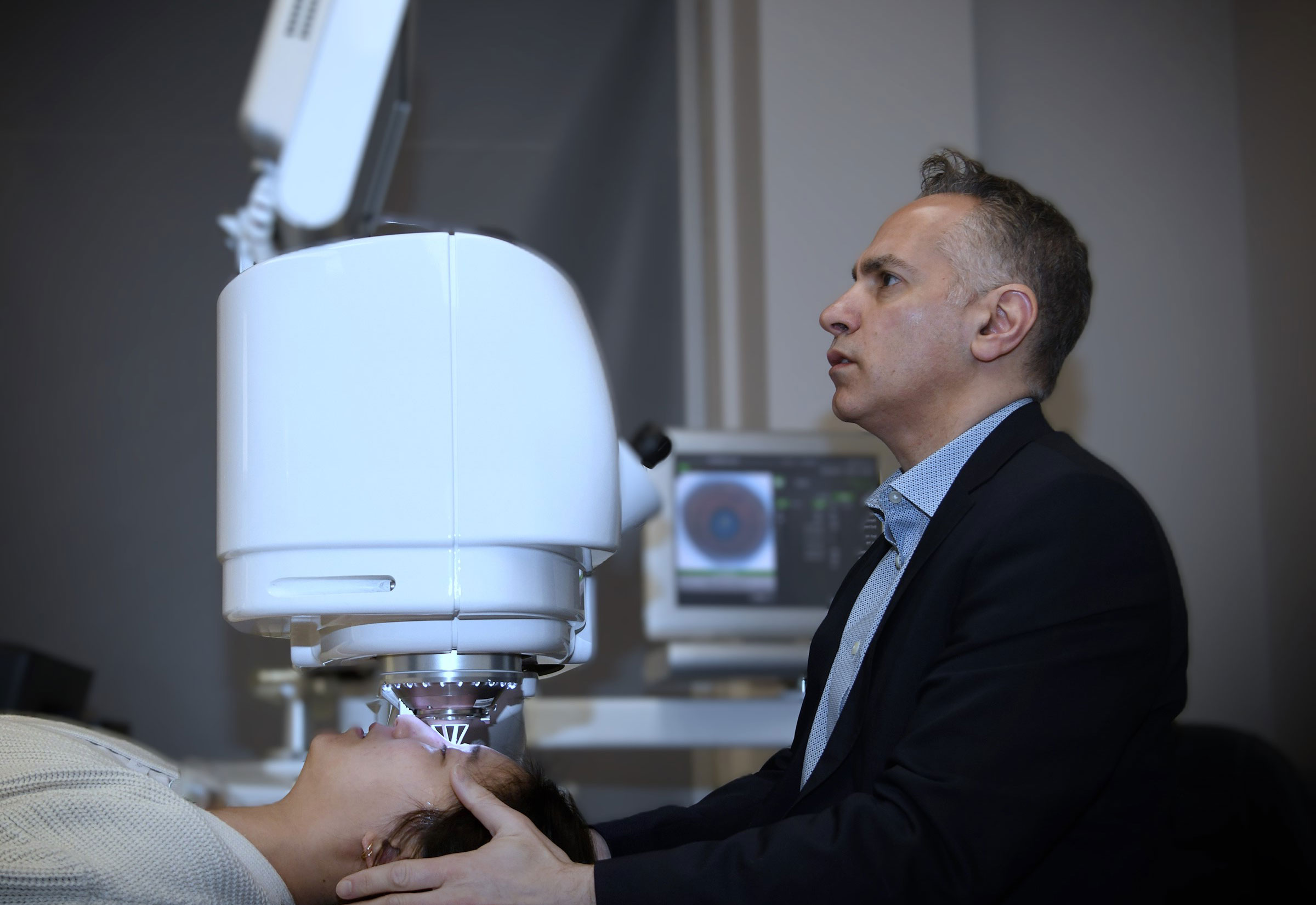
The first step in the LASIK procedure is to create a flap of corneal tissue. The flap is then folded back. The surgeon is then able to perform the laser vision correction treatment with the excimer laser on the inner layers of the cornea. When the flap is replaced it adheres within 6-8 hours and allows for a rapid visual recovery. Since the inception of the traditional LASIK procedure the corneal flap has been created with an automated machine called a microkeratome. In Bladeless LASIK, the surgeon uses a laser to create the corneal flap instead of a blade. The Intralase laser enables the surgeon the ability to customize the corneal flap for every individual patient. The Intralase laser is much safer and drastically reduces the risk of flap complications when compared to using the microkeratome. The Intralase laser allows us to treat those who were previously not candidates due to thin corneas.
Custom Lasik
Custom LASIK is a procedure that enables your surgeon to further customize the conventional LASIK procedure to your individual eyes. This customized procedure may result in patients seeing clearer and sharper than ever before. FDA studies show that Custom LASIK may produce better vision than is possible with contact lenses or glasses.
Understanding How Custom LASIK Works
In Custom LASIK an aberrometer is used to measure the way light travels through your eye. The aberrometer measures more than 250 points through your optical system and creates a customized 3-D map. This map provides information about the unique visual characteristics of your eye which adds an additional level of data about your vision, enabling Dr. Emara to further customize your vision correction.
In clinical studies, Custom LASIK has been able to provide patients with:
- A greater chance of 20/20 vision
- The potential for better vision than is possible with contacts or glasses
- Less incidence of glare and halos
- Potentially better overall vision, even at night
Photorefractive Keratectomy (PRK)
In PRK, Dr. Emara will first remove the top protective layer (epithelium) of the cornea instead of creating a corneal flap as in LASIK.
The second step of the PRK procedure is to reshape the cornea with the excimer laser. After the procedure is complete a bandage contact lens is placed on the eye.
The epithelium will regenerate in about 3-5 days and the doctor sees you a few times at Emara Laser Eye Centers until the epithelium is healed at which time the bandage contact lens is removed. While the epithelium is healing, patients typically experience irritation, tearing and discomfort. Visual recovery is slower in PRK and that is why only one eye is done at a time. PRK was mainly performed prior to the development of LASIK. However, it is still used for enhancement procedures following LASIK and select cases for example, where the cornea is too thin for LASIK or if there is a pre-existing scar that can be eliminated through the procedure.